01
90-minute default
Standard lessons are an hour. Specialist lessons run 90 minutes by default — enough time to settle in, learn, and decompress without the clock running the conversation.
Automatic driving instruction · Barnes & SW London
Automatic, dual-control tuition for every learner. Specialist experience with ADHD, autism, anxiety, dyspraxia and disabled drivers.
20+ years
Instructing in SW London
900+ pupils
Pupils passed
DVSA
Approved ADI
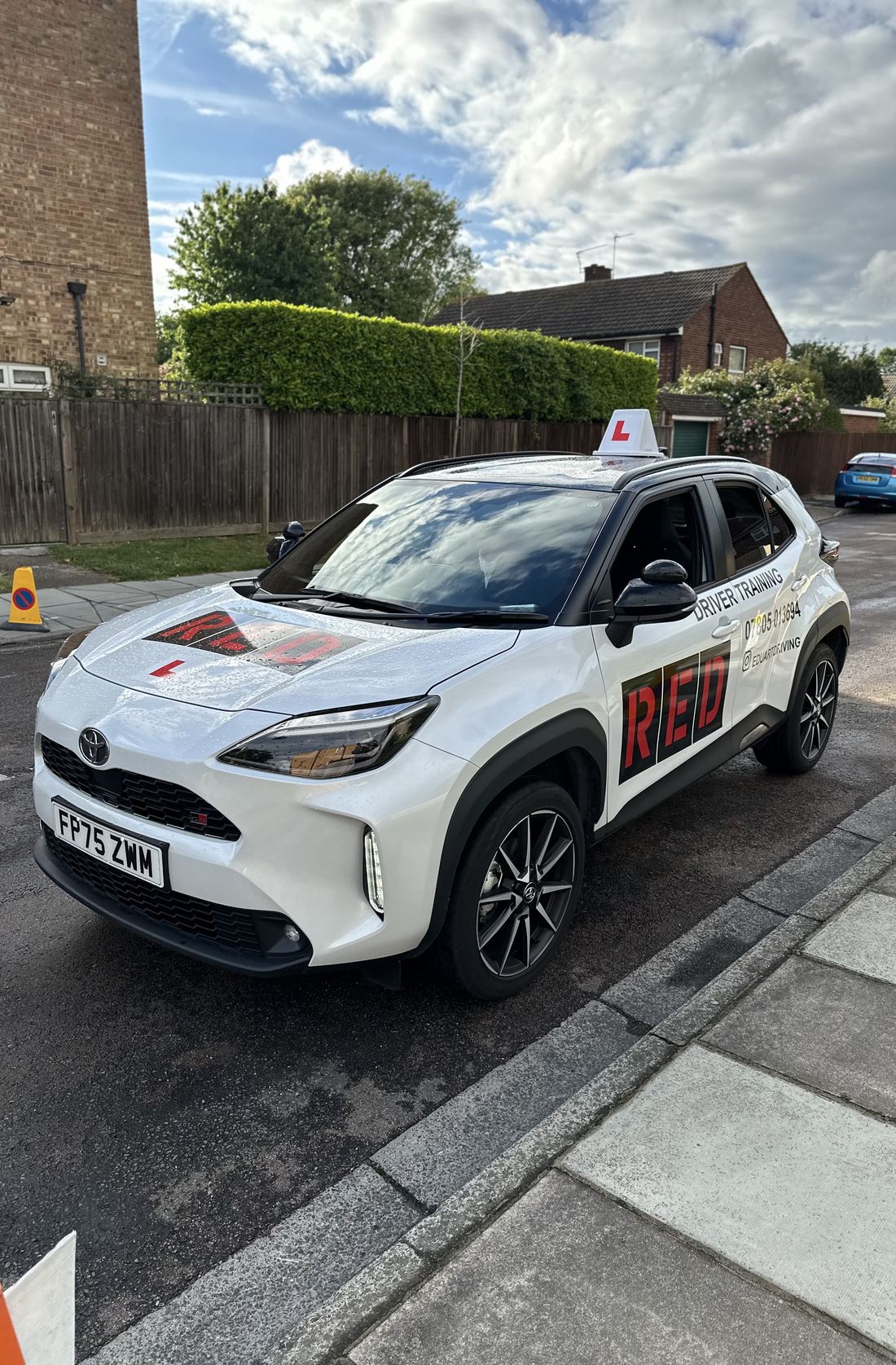
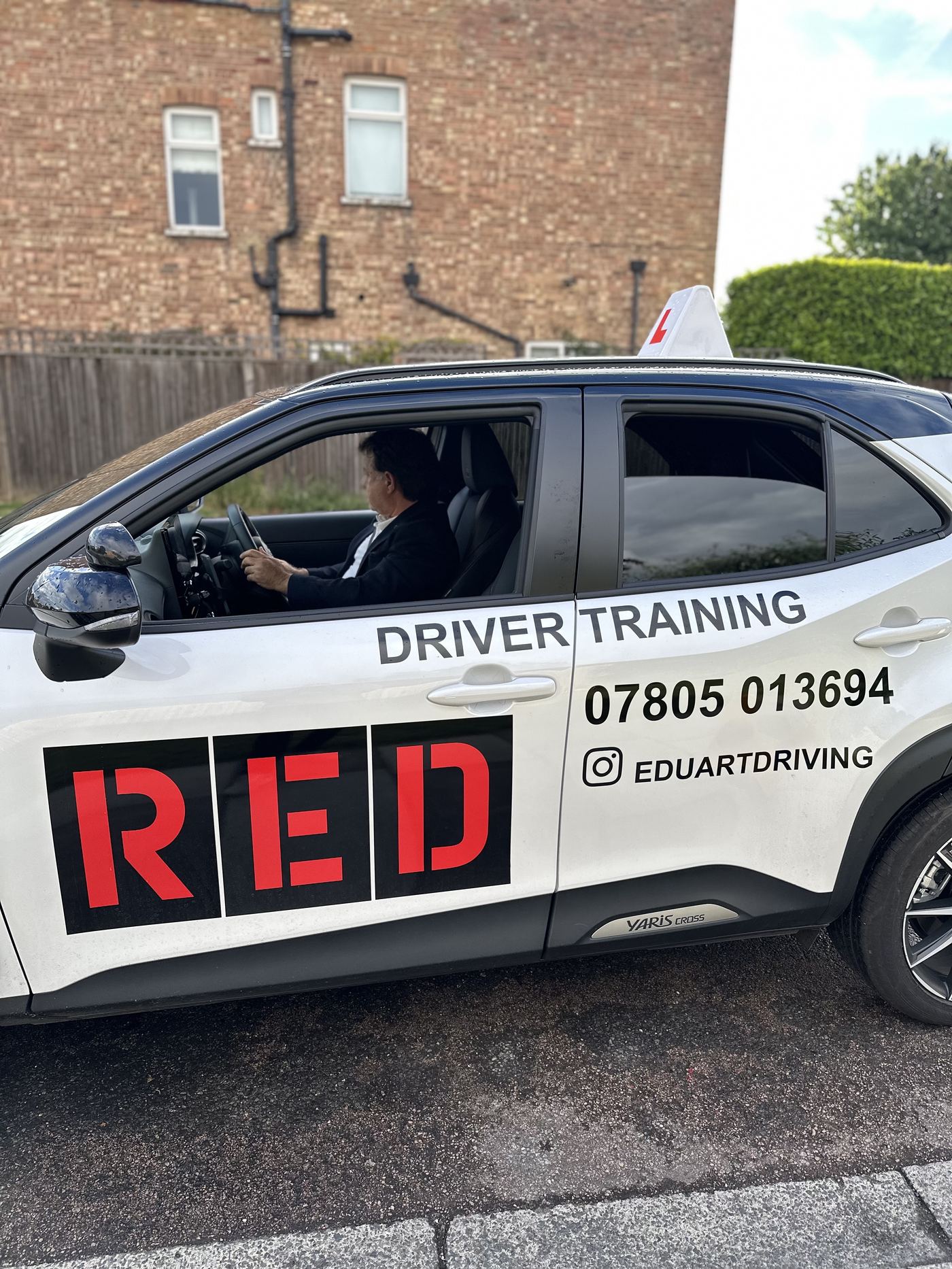
Yaris Hybrid
Automatic, dual-control
About Eduart
I've been teaching people to drive in West and South-West London for 20 years, most of those as a senior automatic instructor at RED Driving School. My approach is the same for every learner: patient, structured, and worked through at the pace that actually suits you — not the pace the syllabus assumes.
Alongside teaching first-time drivers and nervous returners, I've come to specialise in learners whose brains or bodies work a little differently — autistic learners, learners with ADHD, anxiety or dyspraxia, and drivers needing automatic transmission and physical accommodations. They're the learners most often let down by generic instructors, and they're the ones I'm proudest to teach well.
Lessons are calm, never rushed. We work at your pace, not the syllabus's pace. If a manoeuvre needs revisiting twenty times, we revisit it twenty times. If a lesson needs to end early, it ends early — and we pick up where we left off next time.
The approach
Standard lessons share the same calm, patient teaching — at a 60-minute default. Specialist lessons go further: built differently from the ground up around how the learner actually processes a lesson.
01
Standard lessons are an hour. Specialist lessons run 90 minutes by default — enough time to settle in, learn, and decompress without the clock running the conversation.
02
After each new manoeuvre or stressful junction, we pull over. Five minutes of quiet. No debrief, no pressure. The learning consolidates better when the nervous system isn't still running hot.
03
Every lesson ends with a short written note: what we worked on, what's coming next, anything to think about before next time. Useful for the learner, useful for parents, useful for anyone who finds verbal-only feedback hard to retain.
04
A quick WhatsApp the day before each lesson. How are you doing? Anything I should know — sensory state, medication timing, sleep, anything on your mind? Two minutes that saves an hour of guesswork.
Specialist tuition
Most instructors say they work with everyone. That tends to mean they have one teaching style and hope you fit it. I take the opposite approach for learners who need it — the lesson adapts to how your brain and body actually work.
Attention difficulties, working memory, impulse control
Sensory differences, routine, predictability
Driving anxiety, panic, prior bad experiences
Post-accident, post-trauma return to driving
Adapted vehicle, automatic, hand controls subject to consultation
Dyspraxia (motor coordination), dyscalculia (number processing), sensory processing differences, PDA, and related profiles
What pupils say
I passed my driving test first time with Eduart. He's a genuinely excellent instructor who teaches in a clear, structured way. He stays calm, gives straightforward feedback, and makes sure you understand every correction. Eduart helped me build confidence quickly because he pays close attention to how you drive and explains things in a practical, simple way.
My instructor, Eduart, has been amazing. Starting off as a nervous driver, his expertise and patience has really built my confidence — I would highly recommend him.
I've tried multiple instructors over the years and Eduart is by far the best I've had. Highly recommend.
Eduart was fantastic — patient, clear, and genuinely invested in my progress. Thanks to his guidance, I passed. Great value for the quality of teaching you receive.
Recent passes
Each pass posted with the pupil's permission. New passes every few weeks — follow along.
Where I teach
Lessons start and end at your home, school, or a convenient meeting point. The areas below are where I'm based — get in touch if you're slightly outside and I'll let you know.
Transparent pricing
£49 / hour
Experienced with ADHD · Autism / ASD · Anxiety · PTSD · Physical disability · other neurodivergence (dyspraxia, dyscalculia, sensory processing, PDA)
Block bookings save on the per-hour rate.
Payment by bank transfer or cash. Lessons paid for in advance.
Questions I get asked
Some conditions are 'notifiable' to the DVLA — meaning you legally have to declare them before driving on a provisional licence. Autism on its own is not notifiable. ADHD on its own is not notifiable. But some conditions are (epilepsy, certain heart conditions, severe sleep disorders), and some medications affect ability to drive. The DVLA has a full list on gov.uk under 'medical conditions and driving'. If you're unsure, ask your GP or call the DVLA before booking — better to check than guess.
Yes. The DVSA offers 'reasonable adjustments' for the theory test, including extra time, voiceover, BSL interpreter, and reading support. You apply when you book the test — there's a section for it on the booking page. For autistic learners and learners with reading or processing differences, the standard 57-minute test can be extended by up to 100%. I can help with the application if needed.
It limits you to automatic cars only — you can't drive a manual on an automatic licence. For most learners now this isn't a real limitation: the UK car fleet is rapidly moving to automatic, all EVs are automatic, and most rental cars in cities default to automatic. If you specifically want a manual licence later, you'd need to take an additional test in a manual car. Most of my pupils stay automatic for life and never miss the manual.
Honest answer: the DVSA's national average is 45 hours of professional instruction plus 22 hours of private practice. For specialist learners, that average is often higher — sometimes 60 to 80 hours, occasionally more. I won't quote you a number at the start because I'd be guessing. What I will do is give you an honest assessment after the first three lessons, and update it as we go. The pace is yours.
Sometimes yes, sometimes no — it depends on the learner. For some pupils a parent in the back seat is reassuring; for others it's a source of pressure they don't need. We'll talk about it before the first lesson. If we try it and it's not working, we change it — no awkwardness.
Then it ends early. If the sensory load is too high, if anxiety spikes, if the day just isn't working — we stop. You're charged for the time we used, not the full lesson. The point is to learn safely, not to grind through a difficult hour for the sake of it.
Get in touch
No pressure, no sales pitch. Tell me a bit about the learner and what they need — I'll be honest about whether I'm the right fit.